Buy inotherwords-project.eu ?
We are moving the project
inotherwords-project.eu .
Are you interested in purchasing the domain
inotherwords-project.eu ?
domain@kv-gmbh.de · 0541-91531010
Buy inotherwords-project.eu ?
Which tense is used for interpretation?
The present tense is typically used for interpretation. This is because the present tense helps to convey information that is currently relevant or ongoing. By using the present tense, interpreters can accurately convey the meaning of the speaker's words in real-time, allowing for effective communication between individuals who speak different languages. **
Do you write an interpretation in the past tense?
Yes, when writing an interpretation, it is common to use the past tense. This is because the interpretation is typically based on events, actions, or ideas that have already occurred or been presented. Using the past tense helps to convey that the interpretation is a reflection or analysis of something that has already taken place. It also helps to create a sense of distance and objectivity in the interpretation. **


Similar search terms for Tense
Top-Angebote
Products related to Tense:
-
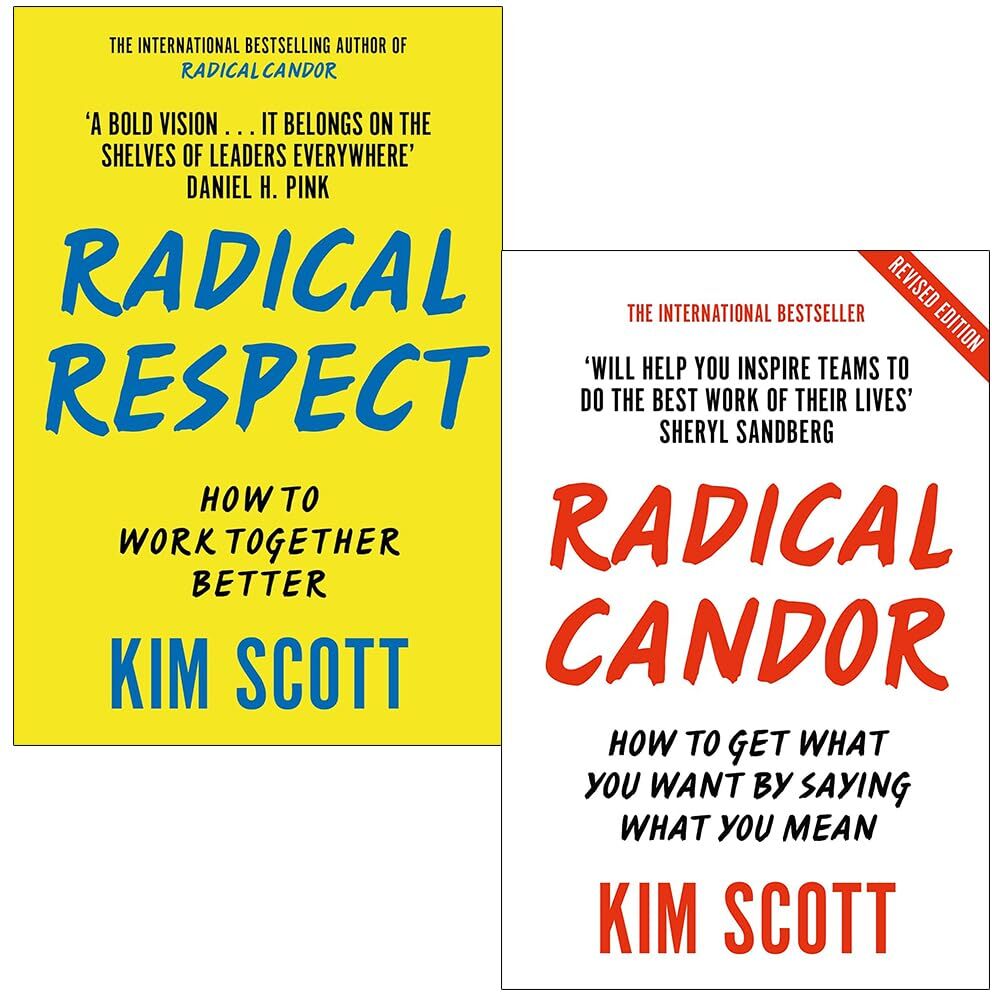
MACMILLAN Kim Scott Collection 2 Books Set Radical Respect & Radical Candor – Leadership, Communication & Workplace Culture GuidesThe Kim Scott Collection – 2 Books Set brings together two transformative leadership bestsellers: Radical Respect and Radical Candor. Written by acclaimed workplace expert Kim Scott, these books offer practical, honest, and empowering guidance for building stronger teams, better communication, and healthier workplace cultures. In Radical Candor, Scott introduces her now-famous framework:Care Personally + Challenge Directly.Learn how to deliver feedback effectively, build trust, and lead with clarity without becoming overly harsh or avoiding difficult conversations. In Radical Respect, Scott expands on inclusion, fairness, accountability and anti-bullying frameworks—showing readers how to build workplaces rooted in dignity, psychological safety, and genuine respect. Together, these books provide a complete roadmap for leaders, managers, HR teams and anyone who wants to communicate better, lead with courage, and create workplaces where people thrive.6,99 £*Shipping: 2,99 £Secure redirect to the provider
-
Does globalization destroy culture?
Globalization can have both positive and negative impacts on culture. On one hand, it can lead to the spread of ideas, values, and traditions across borders, promoting cultural exchange and understanding. However, it can also result in the homogenization of cultures, as Western ideals and consumerism become dominant, potentially eroding local traditions and identities. Ultimately, the impact of globalization on culture depends on how it is managed and whether efforts are made to preserve and celebrate diverse cultural expressions. **
-
When Which Tense?
The tense of a verb indicates the time of an action or state of being. It helps to show whether the action is happening in the past, present, or future. By using different tenses, we can convey when an action took place or will take place in relation to the present moment. It is important to choose the correct tense to accurately communicate the timing of events in writing or speech. **
-
Does the perfect tense come after the perfect tense again?
No, the perfect tense does not come after the perfect tense again. In English grammar, the perfect tense is used to indicate that an action was completed at some point in the past. Once an action has been completed and described using the perfect tense, it does not need to be repeated in the perfect tense again. Instead, other tenses or forms can be used to convey additional information about the action or event. **
-
In which tense do you write an interpretation of a literary text?
When writing an interpretation of a literary text, it is common to use the present tense. This is because the events and characters in the text are being discussed as if they are currently happening or existing. Using the present tense helps to create a sense of immediacy and engagement with the text, allowing the reader to feel more connected to the story and its themes. Additionally, the present tense can also be used to discuss timeless truths or universal themes that are relevant to the present moment. **
What is the difference between present tense and present perfect tense?
The present tense is used to describe actions that are happening right now or are regularly occurring. For example, "I eat breakfast every morning." On the other hand, the present perfect tense is used to describe actions that have been completed at some point in the past, but the exact time is not specified. For example, "I have eaten breakfast already." In this case, the action of eating breakfast has been completed, but the specific time is not mentioned. **
How is the Latin present tense translated into the past tense?
In Latin, the present tense is translated into the past tense by changing the verb endings. For example, the present tense verb "amo" (I love) becomes "amavi" (I loved) in the past tense. The specific ending changes depend on the conjugation of the verb and the person and number of the subject. Additionally, the meaning of the verb may also change to reflect the past action or state. **
Top-Angebote
Products related to Tense:
-
Bantam Jack Reacher Series (21-25) Collection 5 Books Set By Lee Child (Night School, The Midnight Line, Past Tense, Blue Moon, The Sentinel)Night School It's just a voice plucked from the air: 'The American wants a hundred million dollars'.For what? Who from? It's 1996, and the Soviets are long gone. But now there's a new enemy. In an apartment in Hamburg, a group of smartly-dressed young Saudis are planning something big.The Midnight Line Jack Reacher is having a bad day.It would be a dumb idea to make it worse.Reacher sees a West Point class ring in a pawn shop window. It's tiny. It's a woman cadet's graduation present to herself. Why would she give it up? Reacher was a West Pointer too, and he knows what she went through to get it.Past Tense A young couple trying to get to New York City are stranded at a lonely motel in the middle of nowhere. Before long they're trapped in an ominous game of life and death.But the past can be worse . . .Meanwhile, Jack Reacher sets out on an epic road trip across America. He doesn't get far.Blue Moon It's a random universe, but once in a blue moon things turn out just right.In a nameless city, two rival criminal gangs are competing for control. But they hadn't counted on Jack Reacher arriving on their patch.Reacher is trained to notice things.The Sentinel Jack Reacher gets off the bus in a sleepy no-name town outside Nashville, Tennessee. He plans to grab a cup of coffee and move right along.Not going to happen. The town has been shut down by a cyber attack. At the centre of it all, whether he likes it or not, is Rusty Rutherford. He's an average IT guy, but he knows more than he thinks.34,99 £*Shipping: 2,99 £Secure redirect to the provider
-
Penguin UK ltd Jack Reacher Thriller (Book 21-30) by Lee Child 10 Books Set (Night School, The Midnight Line, Past Tense, Blue Moon, The Sentinel, Better off Dead, NTitles in this set: 1. Night School (Book 21) 2. The Midnight Line (Book 22) 3. Past Tense (Book 23) 4. Blue Moon (Book 24) 5. The Sentinel (Book 25) 6. Better off Dead (Book 26) 7. No Plan B (Book 27) 8. The Secret (Book 28) 9. In Too Deep (Book 29) 10. Exit Strategy (Book 30) Description: Night School (Book 21) It's just a voice plucked from the air: 'The American wants a hundred million dollars'. For what? Who from? It's 1996, and the Soviets are long gone. But now there's a new enemy. In an apartment in Hamburg, a group of smartly-dressed young Saudis are planning something big. In the morning they gave Reacher a medal, and in the afternoon they sent him back to school. Jack Reacher is fresh off a secret mission. The Army pats him on the back and sends him to a school with only three students: Reacher, an FBI agent, and a CIA analyst. Their assignment? To find that American. And what he's selling. And to whom. The Midnight Line (Book 22) Jack Reacher is having a bad day. It would be a dumb idea to make it worse. Reacher sees a West Point class ring in a pawn shop window. It's tiny. It's a woman cadet's graduation present to herself. Why would she give it up? Reacher was a West Pointer too, and he knows what she went through to get it. All he wants is to find the woman. He'll have to go through bikers, cops, crooks, and low-life muscle. If she's ok, he'll walk away. If she's not ... he'll stop at nothing. Best advice: stay out of his way. Past Tense (Book 23) The present can be tense . . . A young couple trying to get to New York City are stranded at a lonely motel in the middle of nowhere. Before long they're trapped in an ominous game of life and death. But the past can be worse . . . Meanwhile, Jack Reacher sets out on an epic road trip across America. He doesn't get far. Deep in the New England woods, he sees a sign to a place he has never been - the town where his father was born. But when he arrives he is told no one named Reacher ever lived there. Now he wonders: who's lying? As the tension ratchets up and these two stories begin to entwine, the stakes have never been higher for Reacher. That's for damn sure. Blue Moon (Book 24) It's a random universe, but once in a blue moon things turn out just right. In a nameless city, two rival criminal gangs are competing for control. But they hadn't counted on Jack Reacher arriving on their patch. Reacher is trained to notice things. He's on a Greyhound bus, watching an elderly man sleeping in his seat, with a fat envelope of cash hanging out of his pocket. Another passenger is watching too ... hoping to get rich quick. As the mugger makes his move, Reacher steps in. The old man is grateful, yet he turns down Reacher's offer to help him home. He's vulnerable, scared, and clearly in big, big trouble. What hold could the gangs have on the old guy? Will Reacher be in time to stop bad things happening? The odds are better with Reacher involved. That's for damn sure. The Sentinel (Book 25) No one's...64,99 £*Shipping: 0,00 £Secure redirect to the provider
-
MACMILLAN Kim Scott Collection 2 Books Set Radical Respect & Radical Candor – Leadership, Communication & Workplace Culture GuidesThe Kim Scott Collection – 2 Books Set brings together two transformative leadership bestsellers: Radical Respect and Radical Candor. Written by acclaimed workplace expert Kim Scott, these books offer practical, honest, and empowering guidance for building stronger teams, better communication, and healthier workplace cultures. In Radical Candor, Scott introduces her now-famous framework:Care Personally + Challenge Directly.Learn how to deliver feedback effectively, build trust, and lead with clarity without becoming overly harsh or avoiding difficult conversations. In Radical Respect, Scott expands on inclusion, fairness, accountability and anti-bullying frameworks—showing readers how to build workplaces rooted in dignity, psychological safety, and genuine respect. Together, these books provide a complete roadmap for leaders, managers, HR teams and anyone who wants to communicate better, lead with courage, and create workplaces where people thrive.6,99 £*Shipping: 2,99 £Secure redirect to the provider
-
Which tense is used for interpretation?
The present tense is typically used for interpretation. This is because the present tense helps to convey information that is currently relevant or ongoing. By using the present tense, interpreters can accurately convey the meaning of the speaker's words in real-time, allowing for effective communication between individuals who speak different languages. **
-
Do you write an interpretation in the past tense?
Yes, when writing an interpretation, it is common to use the past tense. This is because the interpretation is typically based on events, actions, or ideas that have already occurred or been presented. Using the past tense helps to convey that the interpretation is a reflection or analysis of something that has already taken place. It also helps to create a sense of distance and objectivity in the interpretation. **
-
Does globalization destroy culture?
Globalization can have both positive and negative impacts on culture. On one hand, it can lead to the spread of ideas, values, and traditions across borders, promoting cultural exchange and understanding. However, it can also result in the homogenization of cultures, as Western ideals and consumerism become dominant, potentially eroding local traditions and identities. Ultimately, the impact of globalization on culture depends on how it is managed and whether efforts are made to preserve and celebrate diverse cultural expressions. **
-
When Which Tense?
The tense of a verb indicates the time of an action or state of being. It helps to show whether the action is happening in the past, present, or future. By using different tenses, we can convey when an action took place or will take place in relation to the present moment. It is important to choose the correct tense to accurately communicate the timing of events in writing or speech. **
Similar search terms for Tense
-
Does the perfect tense come after the perfect tense again?
No, the perfect tense does not come after the perfect tense again. In English grammar, the perfect tense is used to indicate that an action was completed at some point in the past. Once an action has been completed and described using the perfect tense, it does not need to be repeated in the perfect tense again. Instead, other tenses or forms can be used to convey additional information about the action or event. **
-
In which tense do you write an interpretation of a literary text?
When writing an interpretation of a literary text, it is common to use the present tense. This is because the events and characters in the text are being discussed as if they are currently happening or existing. Using the present tense helps to create a sense of immediacy and engagement with the text, allowing the reader to feel more connected to the story and its themes. Additionally, the present tense can also be used to discuss timeless truths or universal themes that are relevant to the present moment. **
-
What is the difference between present tense and present perfect tense?
The present tense is used to describe actions that are happening right now or are regularly occurring. For example, "I eat breakfast every morning." On the other hand, the present perfect tense is used to describe actions that have been completed at some point in the past, but the exact time is not specified. For example, "I have eaten breakfast already." In this case, the action of eating breakfast has been completed, but the specific time is not mentioned. **
-
How is the Latin present tense translated into the past tense?
In Latin, the present tense is translated into the past tense by changing the verb endings. For example, the present tense verb "amo" (I love) becomes "amavi" (I loved) in the past tense. The specific ending changes depend on the conjugation of the verb and the person and number of the subject. Additionally, the meaning of the verb may also change to reflect the past action or state. **
* All prices are inclusive of VAT and, if applicable, plus shipping costs. The offer information is based on the details provided by the respective shop and is updated through automated processes. Real-time updates do not occur, so deviations can occur in individual cases. ** Note: Parts of this content were created by AI.