Buy inotherwords-project.eu ?
We are moving the project
inotherwords-project.eu .
Are you interested in purchasing the domain
inotherwords-project.eu ?
domain@kv-gmbh.de · 0541-91531010
Buy inotherwords-project.eu ?
Does globalization destroy culture?
Globalization can have both positive and negative impacts on culture. On one hand, it can lead to the spread of ideas, values, and traditions across borders, promoting cultural exchange and understanding. However, it can also result in the homogenization of cultures, as Western ideals and consumerism become dominant, potentially eroding local traditions and identities. Ultimately, the impact of globalization on culture depends on how it is managed and whether efforts are made to preserve and celebrate diverse cultural expressions. **
Is the categorical imperative applicable to every culture?
The categorical imperative, as formulated by Immanuel Kant, is a moral principle that states that one should act according to a maxim that can be willed to be a universal law. While this principle may have universal applicability in terms of its logical consistency, its practical application may vary across different cultures. Different cultures may have different moral values and norms, which may not always align with the categorical imperative. Therefore, while the principle itself may be universal, its application may need to be adapted to the specific cultural context. **

Similar search terms for Every
Top-Angebote
Products related to Every:
-
William Morrow Paperbacks What Every BODY is Saying: An Ex-FBI Agent's Guide to Speed-Reading People - Mastering Body Language to Improve Relationships, Build Trust, and BoostOVER 1 MILLION COPIES SOLD Joe Navarro, a former FBI counterintelligence officer and a recognized expert on nonverbal behavior, explains how to "speed-read" people and master the science of understanding human behavior: decode sentiments and behaviors, avoid hidden pitfalls, and look for deceptive behaviors. You'll also learn how your body language can influence what your boss, family, friends, and strangers think of you. Read this book and send your nonverbal intelligence soaring. You will discover: The ancient survival instincts that drive body language Why the face is the least likely place to gauge a person's true feelings What thumbs, feet, and eyelids reveal about moods and motives The most powerful behaviors that reveal our confidence and true sentiments Simple nonverbals that instantly establish trust and communicate authority Filled with examples from Navarro's professional experience, this definitive book offers a powerful new way to navigate your world.5,99 £*Shipping: 2,99 £Secure redirect to the provider
-
Red Vanilla Every Time White Oval Coupe PlatterServe up your favorite meals with soophication & style with this beautifully design oval platter by Red Vanilla. The platter is also dishwasher & microwave safe which allows for a easy set up or clean up. Coorinates perfectly (Everytime White...21,65 $*Shipping: 0,00 $Secure redirect to the provider




-
Will every language eventually become extinct?
It is difficult to predict the future of every language, but it is possible that some languages may become extinct over time due to various factors such as globalization, cultural assimilation, and language shift. However, efforts to preserve and revitalize endangered languages through language revitalization programs, education, and cultural preservation can help prevent their extinction. While some languages may face the risk of extinction, it is important to recognize the value of linguistic diversity and the importance of preserving and celebrating the world's languages. **
-
Is every person capable of language?
Yes, every person is capable of language. Language is a fundamental aspect of human communication and expression, and it is an innate ability that all humans possess. While the specific language a person learns may vary depending on their environment and upbringing, the capacity for language is universal to all individuals. Additionally, the human brain is naturally wired for language acquisition, further supporting the idea that every person is capable of language. **
-
Why does it seem that there is only one language and culture for every fictional species?
It may seem that way because authors often create fictional species based on their own cultural and linguistic backgrounds. This can lead to a lack of diversity in the portrayal of different species in fiction. Additionally, it may be easier for authors to create a single language and culture for a fictional species in order to simplify the storytelling process and make it more accessible to readers. However, there is a growing recognition of the need for more diverse and nuanced representation of fictional species in literature, which is leading to more varied and complex depictions of languages and cultures within these species. **
-
Is there a dream interpretation for every dream?
While there are many theories and interpretations of dreams, not every dream necessarily has a specific interpretation. Dreams can be influenced by a variety of factors such as emotions, experiences, and subconscious thoughts, making them highly personal and unique to each individual. Some dreams may have clear meanings or symbols that can be interpreted, while others may be more abstract or difficult to decipher. Ultimately, the interpretation of a dream can vary depending on the person and their own personal associations and beliefs. **


Is there a person who speaks every language?
No, there is no person who speaks every language in the world. With thousands of languages spoken globally, it is virtually impossible for one person to be fluent in all of them. While there are individuals known as polyglots who can speak multiple languages, it is highly unlikely for someone to master every single language. **
Why does every generation have its own language?
Every generation has its own language because language is constantly evolving and adapting to reflect changes in society, technology, and culture. New words and phrases are created to describe new experiences and concepts that arise with each generation. Additionally, language is influenced by popular culture, slang, and communication trends, leading to differences in vocabulary and communication styles between generations. This evolution allows each generation to express themselves in a way that is relevant and meaningful to their unique experiences and environment. **
Top-Angebote
Products related to Every:
-
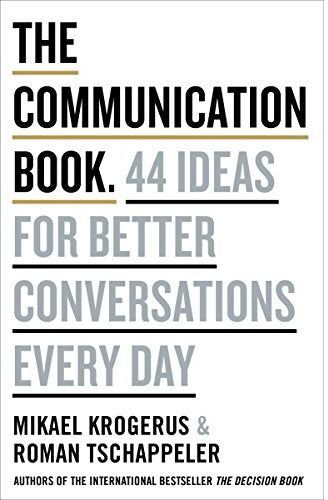
Portfolio Penguin The Communication Book: 44 Ideas for Better Conversations Every DayLEARN THE TECHNIQUES YOU NEED TO COMMUNICATE BETTER AT WORK AND HOME 'Communication is a bit like love - it's what makes the world go round, but nobody really knows how it works.' Struggle to find the words in meetings? Know what you mean but not how to say it? From Aristotle's thoughts on presenting to the Harvard Negotiation Project, internationally bestselling duo Mikael Krogerus and Roman Tschäppeler have 44 tried and tested ideas to change that. Distilled into a single volume, their winning marriage of practicality and humour turns seemingly difficult ideas into clear and entertaining diagrams that will help you: -Brush up on your listening skills and small talk -Run better meetings -Improve the conversations in your head Whether you're a CEO, just starting out or want to improve your relationships at home, this guide will improve your communication skills and help you form more meaningful connections.6,99 £*Shipping: 2,99 £Secure redirect to the provider
-
Macmillan Business How Big Things Get Done: The Surprising Factors Behind Every Successful Project, from Home Renovations to Space ExplorationHow Big Things Get Done: The Surprising Factors Behind Every Successful Project, from Home Renovations to Space Exploration Nothing is more inspiring than a big vision that becomes a triumphant new reality. Think of how Apple’s iPod went from a project with a single employee to an enormously successful product launch in eleven months. But such successes are the exception. Consider how London’s Crossrail project delivered five years late and billions over budget. More modest endeavours, whether launching a small business, organizing a conference, or just finishing a work project on time, also commonly fail. Why? Understanding what distinguishes the triumphs from the failures has been the life’s work of Oxford professor Bent Flyvbjerg. In How Big Things Get Done, he identifies the errors that lead projects to fail, and the research-based principles that will make yours succeed: Understand your odds. If you don’t know them, you won’t win. Plan slow, act fast. Getting to the action quick feels right. But it’s wrong. Think right to left. Start with your goal, then identify the steps to get there. Find your Lego. Big is best built from small. Master the unknown unknowns. Most think they can’t, so they fail. Flyvbjerg shows how you can. Full of vivid examples ranging from the building of the Sydney Opera House to the making of the latest Pixar blockbusters, How Big Things Get Done reveals how to get any ambitious project done – on time and on budget.2,99 £*Shipping: 1,99 £Secure redirect to the provider
-
William Morrow Paperbacks What Every BODY is Saying: An Ex-FBI Agent's Guide to Speed-Reading People - Mastering Body Language to Improve Relationships, Build Trust, and BoostOVER 1 MILLION COPIES SOLD Joe Navarro, a former FBI counterintelligence officer and a recognized expert on nonverbal behavior, explains how to "speed-read" people and master the science of understanding human behavior: decode sentiments and behaviors, avoid hidden pitfalls, and look for deceptive behaviors. You'll also learn how your body language can influence what your boss, family, friends, and strangers think of you. Read this book and send your nonverbal intelligence soaring. You will discover: The ancient survival instincts that drive body language Why the face is the least likely place to gauge a person's true feelings What thumbs, feet, and eyelids reveal about moods and motives The most powerful behaviors that reveal our confidence and true sentiments Simple nonverbals that instantly establish trust and communicate authority Filled with examples from Navarro's professional experience, this definitive book offers a powerful new way to navigate your world.5,99 £*Shipping: 2,99 £Secure redirect to the provider
-
Does globalization destroy culture?
Globalization can have both positive and negative impacts on culture. On one hand, it can lead to the spread of ideas, values, and traditions across borders, promoting cultural exchange and understanding. However, it can also result in the homogenization of cultures, as Western ideals and consumerism become dominant, potentially eroding local traditions and identities. Ultimately, the impact of globalization on culture depends on how it is managed and whether efforts are made to preserve and celebrate diverse cultural expressions. **
-
Is the categorical imperative applicable to every culture?
The categorical imperative, as formulated by Immanuel Kant, is a moral principle that states that one should act according to a maxim that can be willed to be a universal law. While this principle may have universal applicability in terms of its logical consistency, its practical application may vary across different cultures. Different cultures may have different moral values and norms, which may not always align with the categorical imperative. Therefore, while the principle itself may be universal, its application may need to be adapted to the specific cultural context. **
-
Will every language eventually become extinct?
It is difficult to predict the future of every language, but it is possible that some languages may become extinct over time due to various factors such as globalization, cultural assimilation, and language shift. However, efforts to preserve and revitalize endangered languages through language revitalization programs, education, and cultural preservation can help prevent their extinction. While some languages may face the risk of extinction, it is important to recognize the value of linguistic diversity and the importance of preserving and celebrating the world's languages. **
-
Is every person capable of language?
Yes, every person is capable of language. Language is a fundamental aspect of human communication and expression, and it is an innate ability that all humans possess. While the specific language a person learns may vary depending on their environment and upbringing, the capacity for language is universal to all individuals. Additionally, the human brain is naturally wired for language acquisition, further supporting the idea that every person is capable of language. **
Similar search terms for Every
-
Red Vanilla Every Time White Oval Coupe PlatterServe up your favorite meals with soophication & style with this beautifully design oval platter by Red Vanilla. The platter is also dishwasher & microwave safe which allows for a easy set up or clean up. Coorinates perfectly (Everytime White...21,65 $*Shipping: 0,00 $Secure redirect to the provider
-
Why does it seem that there is only one language and culture for every fictional species?
It may seem that way because authors often create fictional species based on their own cultural and linguistic backgrounds. This can lead to a lack of diversity in the portrayal of different species in fiction. Additionally, it may be easier for authors to create a single language and culture for a fictional species in order to simplify the storytelling process and make it more accessible to readers. However, there is a growing recognition of the need for more diverse and nuanced representation of fictional species in literature, which is leading to more varied and complex depictions of languages and cultures within these species. **
-
Is there a dream interpretation for every dream?
While there are many theories and interpretations of dreams, not every dream necessarily has a specific interpretation. Dreams can be influenced by a variety of factors such as emotions, experiences, and subconscious thoughts, making them highly personal and unique to each individual. Some dreams may have clear meanings or symbols that can be interpreted, while others may be more abstract or difficult to decipher. Ultimately, the interpretation of a dream can vary depending on the person and their own personal associations and beliefs. **
-
Is there a person who speaks every language?
No, there is no person who speaks every language in the world. With thousands of languages spoken globally, it is virtually impossible for one person to be fluent in all of them. While there are individuals known as polyglots who can speak multiple languages, it is highly unlikely for someone to master every single language. **
-
Why does every generation have its own language?
Every generation has its own language because language is constantly evolving and adapting to reflect changes in society, technology, and culture. New words and phrases are created to describe new experiences and concepts that arise with each generation. Additionally, language is influenced by popular culture, slang, and communication trends, leading to differences in vocabulary and communication styles between generations. This evolution allows each generation to express themselves in a way that is relevant and meaningful to their unique experiences and environment. **
* All prices are inclusive of VAT and, if applicable, plus shipping costs. The offer information is based on the details provided by the respective shop and is updated through automated processes. Real-time updates do not occur, so deviations can occur in individual cases. ** Note: Parts of this content were created by AI.